The Trump administration is proceeding with its scheme to alter cryptocurrency regulation in the United States, even though a major crypto bill is still stalled in Congress.
The situation shows an ever-widening gap in Washington. Although lawmakers have had difficulty reaching agreement on comprehensive regulations for digital assets, federal regulators are becoming more inclined to make use of their current powers in order to establish a framework that is more favourable to cryptocurrency.
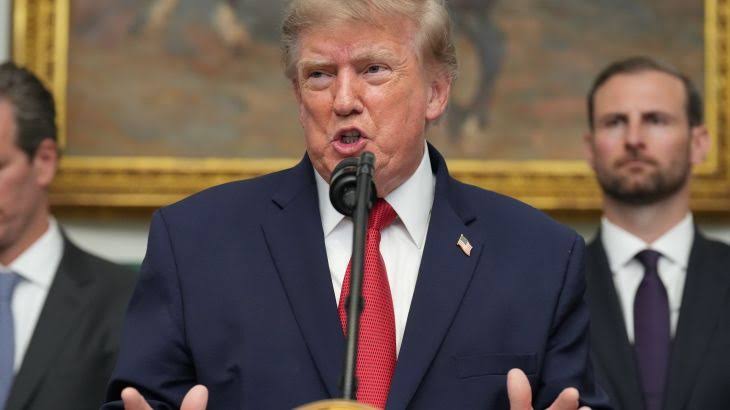
On August 19, President Donald Trump once again advocated for action by Congress and asked lawmakers to approve a “fair version” of the CLARITY Act during a meeting at the White House with representatives from the cryptocurrency industry and regulators. The act is intended to set clearer rules for digital assets and to decide when tokens should be classified as securities or as commodities.
The administration’s problem is that the bill has come to a standstill in the Senate.
The CLARITY Act has already been passed by the House, but Senators have not been able to reach an agreement that would enable the legislation to proceed. Since the Republicans have a narrow majority in the Senate, the bill needs considerable bipartisan support to be approved there.
Regulators are moving without waiting for Congress
Since the legislative process is at a standstill, organisations such as the Securities and Exchange Commission and the Commodity Futures Trading Commission are assuming a more prominent role in deciding how the crypto industry will function.
The SEC is developing a framework which might grant exemptions for certain crypto offerings, while the CFTC is progressing with its plans relating to cryptocurrency derivatives and other digital assets.
The method enables the administration to make headway with crypto regulation without having to wait for Congress to pass an extensive law relating to market structure.
It might provide cryptocurrency companies with more clarity in the short term, but it also causes uncertainty regarding how permanent the changes will be.
Federal agencies are generally free to alter the rules that they have established, whereas a law passed by Congress would provide a more lasting framework.
Why the CLARITY Act matters
A major problem which the American crypto industry has had is uncertainty as to which federal agency should be responsible for regulating various digital assets.
The CLARITY Act aims at defining more clear boundaries between the SEC and the CFTC and at setting rules for crypto exchanges, brokers, and dealers.
Crypto companies say that having predictable rules would promote investment and innovation in the United States, while those in support of the legislation also think that clearer regulation would help the country compete with other major financial and technology markets.
The law has now become a politically complicated matter.
The Democrats have expressed concerns regarding ethics and President Trump’s financial involvement in the cryptocurrency industry; according to a report by Reuters, Trump has made more than $1.4 billion from his family’s crypto activities, which has added another dimension to the controversy over the legislation.
Trump would like the United States to be leading in the area of crypto.
He has on many occasions advocated the notion of making the United States a global leader in the field of cryptocurrency.
At the meeting at the White House he said that having clearer rules would help American companies to compete internationally and would promote innovation in the digital-asset industry. Executives from crypto companies such as Coinbase, Robinhood and Ripple were present at the meeting.
The administration has already achieved advances in other aspects of crypto policy. In 2025 Trump signed the GENIUS Act, which set up a federal regulatory framework for stablecoins. The law is expected to play an important role as banks and financial companies increase their use of digital currencies.
The CLARITY Act is different since instead of mainly concentrating on stablecoins it would look at the wider crypto market.
What happens next?
At the moment, Washington seems to be following two different courses.
Congress might at some point pass broad legislation, thus providing the industry with a solid legal framework over the long term, while the SEC and CFTC can keep on making rules under their present authority.
In September the Senate is expected to look again at the CLARITY Act, but the act’s future is still uncertain.
Despite that uncertainty, investors have still reacted positively to the administration’s most recent crypto initiative. Bitcoin increased sharply after Trump showed his renewed support for the legislation, and several crypto-related stocks also rose.
The real issue is whether regulation driven by agencies can offer the level of certainty needed by the industry if Congress keeps on delaying.
The way the Trump administration has handled cryptocurrency companies is a big departure from the more enforcement-oriented policies of the earlier administration. However, since there has been no legislation passed by Congress, many of the industry’s major regulatory issues could still end up being affected by future political decisions.
At the moment, the Trump administration is proceeding — whether or not Congress agrees.